
THE PEOPLE PRETENCE - Hilary Gray, Emily Cousins & Jana Garous
Episode 7 - ELEPHANT IN THE BOARDROOM
People are our greatest asset. It's in every agency pitch deck, printed in bold, framed on the wall by reception. This roundtable was about what it actually takes to mean it.
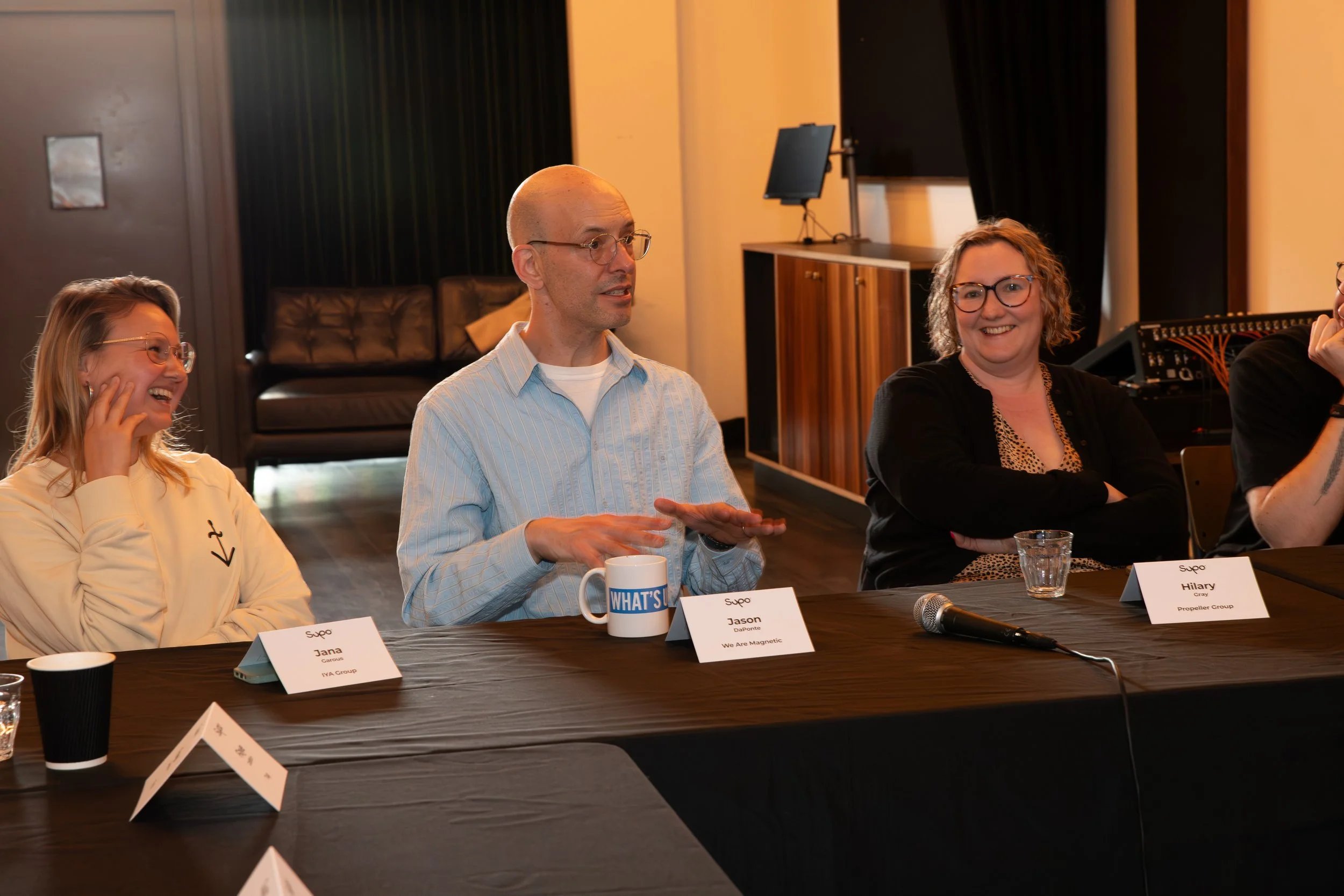
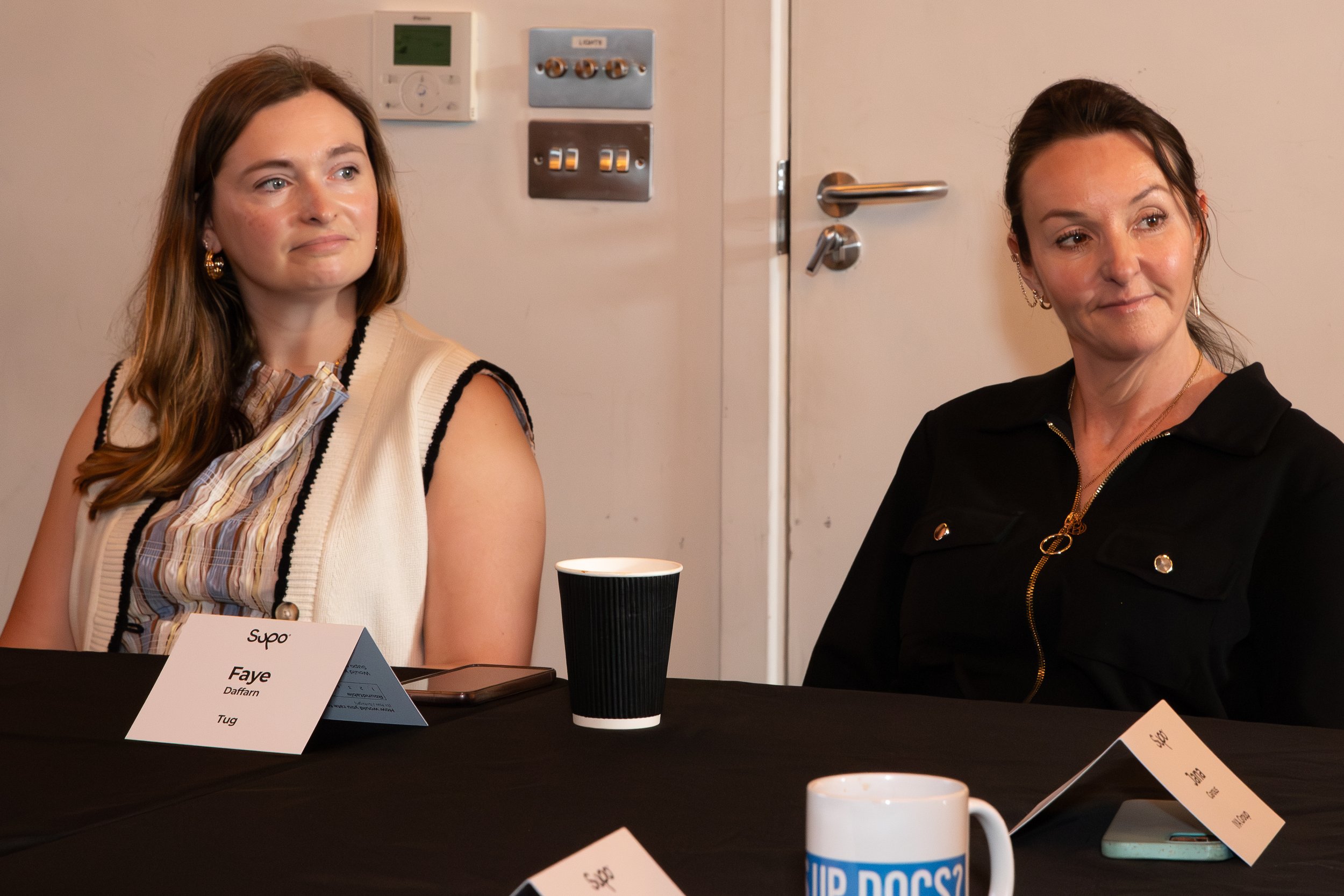
Three guests, three different agencies, three different sizes. Hilary Gray has kept culture structural through years of growth at Propeller Group, twice named a Sunday Times Best Place to Work. Emily Cousins started as employee number one at Realtime. and watched the business grow to nearly 90 people before its acquisition, tracking exactly where the culture starts to strain. Jana Garous has built teams across sectors and sees the same failure pattern everywhere: the moment a business starts treating people as a line item instead of an asset.
Culture Is a Policy, Not a Party
Hilary joined her agency 15 years ago, when culture largely meant organised drinking. What's changed isn't the fun, it's what sits underneath it.
"If you don't have policies that truly care about people, it doesn't matter how many team nights out you have, your people aren't going to be happy."
Propeller Group runs a hybrid policy of eight office days a month, deliberately built around flexibility rather than headcount presence for its own sake. One of the clearest examples came almost by accident: a post-Covid policy letting staff work from anywhere for a month evolved, once the team noticed who was and wasn't using it, into an official policy covering all school holidays. No client impact, real impact on people's lives. That's the test Hilary applies to every policy: does it cost the business anything real, and does it make someone's life meaningfully easier.
Family, Village, Tribe
Emily uses a framework, borrowed from Reid Hoffman, to describe how culture changes as a business scales: family, village, tribe. At ten or fifteen people, everyone pulls in one direction. Emily remembers the whole company splitting a thousand ads between them overnight for a new client, CEO included, because that's simply what the moment required.
"There comes a certain point where you kind of walk into the office one day and you realise, oh, actually, we're big enough now. Not everyone can fit in the same room anymore."
That inflection point is where intentional culture-building has to start replacing instinct. Hiring for fit becomes a discipline rather than a feeling, and managing people through change becomes as central to scaling as any process or tool.
When Businesses Start Seeing Numbers Instead of People
Jana has built teams across multiple sectors and sees one consistent failure mode: organisations lose their culture the moment they stop putting people first and start chasing short-term numbers instead.
"Where organisations really fail is that when they stop putting the people as their asset first, number one, and start looking for numbers and short-term gains and profits."
Her own approach leans hard into hybrid and remote working, shaped by her Norwegian background and a belief that global talent is one of the biggest opportunities available to agencies willing to build the right processes to support it, rather than defaulting to the assumption that remote teams can't build real culture.
The Most Expensive Mistake
Hilary is candid about where the costliest errors happen: rushed hiring under pressure, usually right after landing a big new client, when the whole team feels the strain and the instinct is to fill the gap fast.
"One of the most expensive mistakes that we've made as a business is those hires that weren't right for us... it's not just the cost of hiring them, but the impact on the rest of the team."
The fix isn't a hiring freeze, it's holding the line on culture fit even under pressure, because a wrong hire's cost compounds well beyond the recruitment budget.
Mentorship Over Management
Both Emily and Jana point to the same gap: technically brilliant people promoted into management without the support to actually manage. Emily's agency grew by hiring and developing junior talent internally, which meant a lot of first-time managers learning on the job, often without enough structured mentorship. It's the one thing she'd change if she started again.
"I think there comes a certain point when you're growing a business where you need to decide whether you hire above people, or whether you kind of hire underneath people and support them and grow."
Jana works with three mentors and a performance coach personally, and treats external mentorship as fundamental for exactly this reason: it's not about fixing weakness, it's about learning faster from someone who's already made the same mistakes.
What Breaks First
Asked what actually breaks when growth outpaces people development, Hilary doesn't point to burnout or attrition first. She points to client work.
"You start to get problems with clients really quickly, because people don't know what they're doing... you can't just hire a load of juniors and go for it."
Growing too fast without enough senior mentorship in place shows up first in the work itself, long before it shows up in exit interviews.
About Supo:
Supo provides people-first intelligence software for professional services firms, helping businesses maximize profit and motivate their people through powerful, AI-enabled business intelligence dashboards. By connecting over 500+ platforms and providing real-time data analysis, Supo helps firms make better data-driven decisions about their profit, projects, and people.
For more information about Supo: www.supo.co.uk
About Hilary Gray, Propeller Group:
Hilary Gray is Associate Director - Group Operations at Propeller Group, a global PR agency specialising in advertising, media and technology clients. She joined as one of five people in the PR team in 2010 and has grown with the agency to over 50, now responsible for people and processes across the group. Hilary also serves as Head of Marketing at Bloom UK, a professional network championing women in advertising and communications.
For more information about Propeller Group: https://www.propellergroup.com/
About Emily Cousins, Realtime.:
Emily Cousins is Senior Vice President of Operations at Realtime., a digital marketing agency she joined as employee number one and helped scale from a boutique social advertising startup to an 80-person global business, through to its acquisition by Pixis AI in 2024. She built the agency's operational infrastructure from the ground up, including profitability reporting, performance management and international expansion into New York, Denver and the Philippines.
For more information about Realtime.: https://realtimeagency.com/
About Jana Garous, DG Solutions:
Jana Garous led DG Solutions, an IT consultancy she built from close to the ground up into a £20 million business advising major UK firms in retail, finance and healthcare. Across nearly two decades she has founded multiple ventures spanning sustainability, digital education and technology consulting, and now serves as COO in Residence at Canopy Community, supporting founders and collaborating with Bayes Business School on programmes for emerging business leaders.
For more information about DG Solutions: https://www.dgsolutions.io/
Culture isn't the away day. It's the policy, the honest conversation, the hire you didn't make because the fit was wrong.