
From guesswork to growth: when gut feeling stops being enough
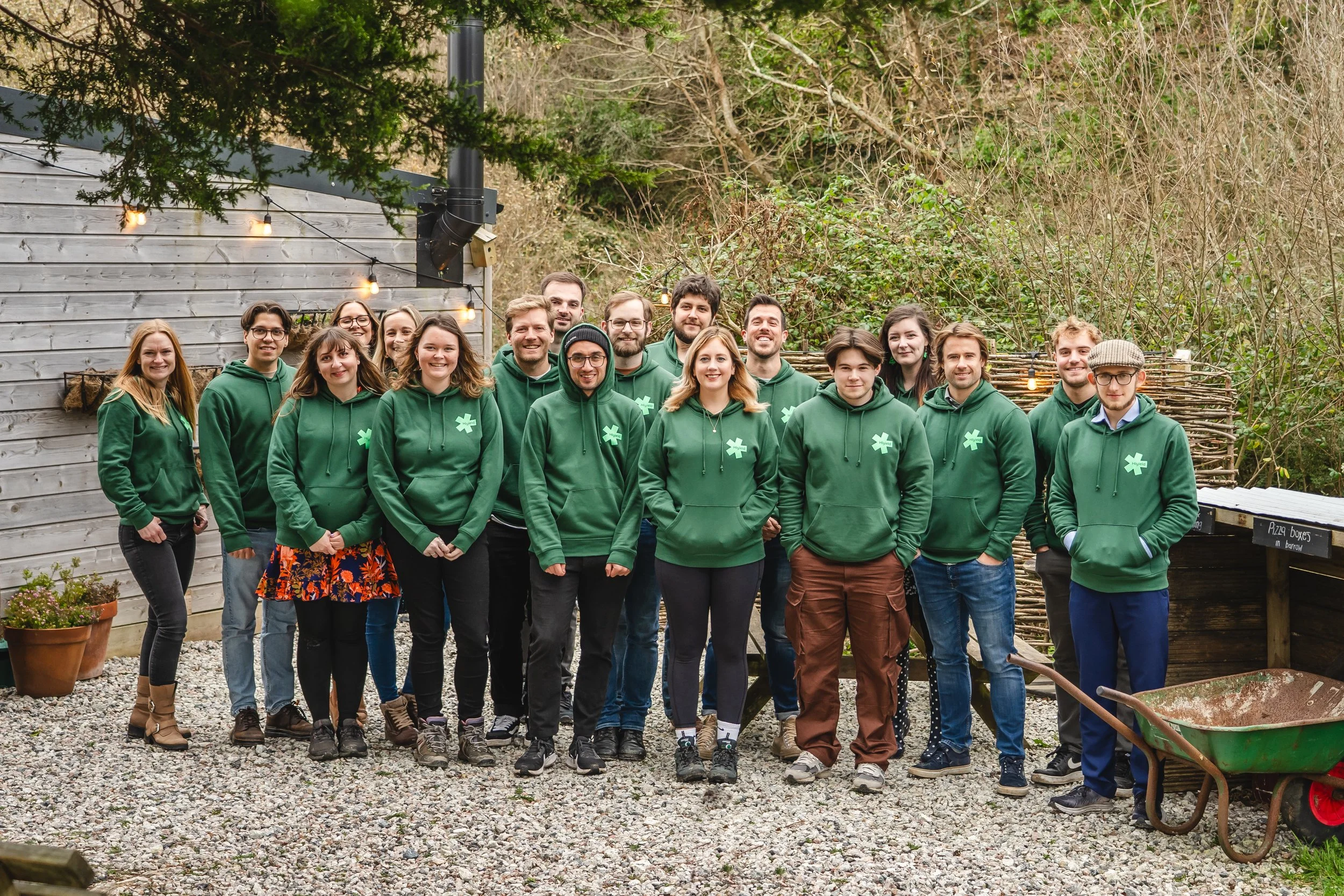
Photo by https://hiyield.co.uk/
You hit 20 people. Then 25. Suddenly the founder instinct that got you here starts holding you back. Matt Ville and Laura Hudspith from Hiyield discovered this the hard way when preparing for their Employee Ownership Trust transition revealed an uncomfortable truth: the systems that worked for three people were actively sabotaging them at 25.
As co-founder and CTO, Matt admits something most founders won't: "When I started Hiyield, I didn't really know how to run a business. Some will say I still don't know." Meanwhile, Laura, head of operations, was spending hours each month manually pulling reports from five different systems, watching billable hours get "lost in the aether" whilst the team just wanted to "crack on with the work."
In their conversation on That Moment podcast, they reveal what sustainable transformation looks like when you can't afford to stop delivering client work whilst fixing the engine - and why the work you avoid early becomes exponentially harder later.
The productive paradox
Hiyield started with Productive—an all-in-one agency management system covering project management, invoicing, and time tracking. For a team of three, it was perfect. One monthly subscription, one piece of software, everything they needed.
"It was ideal for us at that stage," Matt explains. "But what we found was as we grew as a team and had more defined disciplines, each of those areas needed slightly different information or needed to run their processes in a slightly different way. And Productive wouldn't allow us to have that flexibility."
So they did what many scaling agencies do: they split into "best in class" tools. ClickUp for task management. Everhour for time tracking. Separate systems for finance, holidays, client relationship management.
The result? Laura found herself opening potentially five different tools to create monthly reports. "It was obviously much more time consuming, and it's prone to human error as well," she notes. What looked like gaining flexibility turned into operational fragmentation.
This pattern reveals a crucial insight about digital transformation in professional services: sometimes "best in class" tools create worse problems than the "good enough" system you left behind - not because the tools are bad, but because the integration work gets underestimated.
When only three people can see the numbers
The Employee Ownership Trust transition forced uncomfortable conversations Hiyield had been avoiding. With everyone effectively becoming owners, how could they ask 25 people to think like owners when only three people in leadership could see the financial data?
"We obviously knew all of the data from a financial point of view," Matt reflects. "We knew the Xero data. We knew the data from the project management system. But the data didn't really go beyond that leadership three."
The team received crucial information about organisational performance, but not the granular numbers - billable time, utilisation rates, project profitability. The EOT made them rethink everything.
"The whole thing about EOT is everyone is effectively an owner," Matt explains. "So the nice thing for us to do was actually to empower the team to have more information."
They established a larger leadership group - eight people cross-functional across the team. But that created a new problem: how do you give them information to make decisions when your data sits scattered across multiple systems?
This challenge matters for innovation in professional services because it highlights a fundamental tension: you can't distribute decision-making authority without distributing the information needed to make good decisions.
The integration nobody warned you about
Laura and Katherine (head of delivery) took a phased approach, working with Supo to integrate one system at a time. Revenue figures first. Then projects. Then utilisation and team data.
"These things always end up being a much larger project than you actually imagine," Laura admits. "It helped us spread the load with our existing day jobs as well."
But the real work wasn't technical integration - it was data cleansing nobody had anticipated. "It really did turn into a piece of work that involved us re-categorising all of our contracts, renaming everything, which was a lot bigger than we kind of imagined," Laura reveals.
Matt adds context: "When you've got large volumes of data, it's just harder to make change. If you want accurate historical data, then you've got to go back and look at all of those invoices and make sure they're coded in a certain way."
This unglamorous reality of change management in professional services rarely makes it into case studies: before you can make data-driven decisions, someone has to go back and fix all the messy historical records nobody wanted to deal with.
Developers versus admin
Here's where psychology meets operations. Hiyield's team are developers - they want to design, develop, and make things better. The thought of how work gets contracted or paid for? Not the most exciting thing.
"The team are always just desperate to get straight into the work," Laura explains. "We win a contract and the team are like, brilliant, let's crack on. And sometimes the thought of how that's actually going to be contracted or paid for was sometimes not the most exciting thing."
This created a pattern where billable hours got tracked in the wrong place, or didn't get tracked at all. Work that should have been billed got "lost in the aether" or written off.
The solution wasn't forcing process on resistant creatives. It was showing them the connection between their actions and business outcomes. "It's really nice to be able to show them the dashboards and say, well, this is why we do it. This is what it means. Look, if you do this, then this happens and these numbers go up."
This approach to client engagement strategies recognises that people resist admin work when they can't see its purpose. But when you connect time tracking to the business's success - especially in an Employee Ownership Trust where everyone has a stake - resistance transforms into understanding.
The counterintuitive quarter
Between Q1 and Q2, something surprising happened. Revenue dropped 10% - a natural dip in agency life. But Laura could now track a metric they'd never looked at before: recognised revenue (what the team were actually working on, what was billable that month).
The surprise? Despite the 10% revenue dip, they saw a 5% upturn in gross profit on projects.
"Just by making a few small tweaks, by having that data available, that headline stat of revenue - although if we'd only looked at that one, it would have looked like it had gone down - but actually the money coming into the business and the profit we were retaining had gone up," Laura explains.
This matters because it reveals how misleading single metrics can be. Revenue alone told a story of decline. But profit told a story of improved effectiveness - the result of dozens of small improvements compounding.
Matt calls this the "squeezing the toothpaste" philosophy: "If it's only like 1 or 2% here, a little squeeze here and there, then they do add up to quite a big change. In times right now where a lot of professional services companies are finding it hard to win new clients, there really needs to be a big drive on making sure the work you do have is delivered in the most optimal way."
Numbers don't lie
One of the most powerful shifts came in how conversations changed. Before data visibility, difficult discussions relied on gut feeling and finger-in-the-air estimates.
"It's quite interesting when you have data because numbers don't lie," Laura notes. "It's really nice to be able to have conversations that are actually based on something that's fact. Whereas before we might have been using gut feeling, it's really nice to go, 'Well, actually, let's look at the numbers and look, you're doing really, really well this month.'"
This transformation in business transformation in professional services reveals something subtle but crucial: data doesn't just inform decisions - it changes the emotional texture of leadership conversations. Celebration becomes evidence-based. Difficult conversations become less personal because you're discussing facts, not feelings.
From founder control to distributed ownership
Perhaps the deepest transformation wasn't operational - it was psychological. Matt had held financial responsibility for years. But sustainable growth required distributing that ownership across the team.
"Only last week actually, we did a new style leadership meeting where we started having this data visible within those teams," he shares. "Our head of web app, who's a technical person, they will now have the GDP numbers for their team, what they're billing, the utilisation. So actually we can distribute that data and they can be taking ownership over those numbers."
This matters particularly for Employee Ownership Trusts, where everyone has equal ownership but operational reality requires structures. The Hiyield EOT board now receives information that can be disseminated to team members not in leadership positions.
"It really helps build that mindset across the entire team," Laura adds. "In one-to-ones, a team member can now look at billable hours tracked. It's quite good for giving context because in an agency we ask the team to track their time - it's a job nobody likes doing - but it's really nice to show them the dashboards and say, 'This is why we do it.'"
The timing regret
When asked what he'd do differently, Matt doesn't hesitate: start earlier.
"We've been like a £1 million plus revenue business for maybe four years now. I think we should have been doing some of these things probably a bit quicker. We probably put them off because we were growing other areas of our business. But ultimately it's probably slightly easier to do when you're smaller and grow with the systems in place."
Laura adds her own lesson: "Before we started, I don't really think there was anything wrong with our data until you start looking at it and you realise, okay, yeah, we definitely have to spend a bit of time. I'd probably say if we want to scale and grow, we really needed to take some time now to make sure we have the foundations in place."
This tension defines every scaling professional services firm: the work feels urgent now, but building proper foundations feels less urgent until suddenly it's exponentially harder.
Moving forward: from instinct to intelligence
The conversation with Matt Ville and Laura Hudspith reveals what separates firms that scale sustainably from those that plateau: a willingness to confront the uncomfortable truth that founder instinct has an expiration date.
Matt's honesty about not knowing how to run a business when he started - and some saying he still doesn't - is refreshing precisely because it's rare. Most founders perform certainty. But sustainable growth requires admitting what you don't know and building systems that don't require you to know everything.
The Hiyield story isn't about implementing software. It's about the leadership transformation required when gut-feeling decisions stop being enough. It's about confronting data cleansing work nobody talks about. And it's about recognising that the systems serving three people will actively sabotage you at 25.
Revenue down, profits up isn't just about numbers - it's about having the confidence to make informed decisions and the systems to empower your entire team. Sometimes the best business decisions look counterintuitive from the outside until you understand what's actually happening beneath the surface.
Ready to move beyond gut-feeling decisions?
Listen to the full episode with Matt Ville and Laura Hudspith and discover how preparing for Employee Ownership Trust revealed the operational foundations they'd been building on sand - and what they did about it.
About Supo:
Supo provides people-first intelligence software for professional services firms, helping businesses maximise profit and motivate their people through powerful, AI-enabled business intelligence dashboards. By connecting over 500+ platforms and providing real-time data analysis, Supo helps firms make better data-driven decisions about their profit, projects, and people.
For more information about Supo: www.supo.co.uk
About Hiyield:
Hiyield is a B Corp certified digital agency based in Truro, Cornwall, creating bespoke websites and web apps with sustainability at their core. They craft digital experiences that elevate businesses whilst looking after the planet, producing Carbon & Emissions reports for every project delivered. After six years of founder-led growth, they transitioned to an Employee Ownership Trust in March 2025, guided by three core values: Fearless progression + Active Partnership = Rewarding work.
For more information about Hiyield: https://hiyield.co.uk/