
The agency reset
The pipeline feels slower.
Campaigns that once generated opportunities aren't converting at the same rate. Sales cycles are stretching, clients are taking longer to make decisions, and growth feels increasingly difficult to predict.
When that happens, it's tempting to blame the market: economic uncertainty, procurement processes, AI disruption, changing buyer behaviour.
But before pointing to external forces, there is a more uncomfortable question worth asking:
Are we actually doing enough to progress?
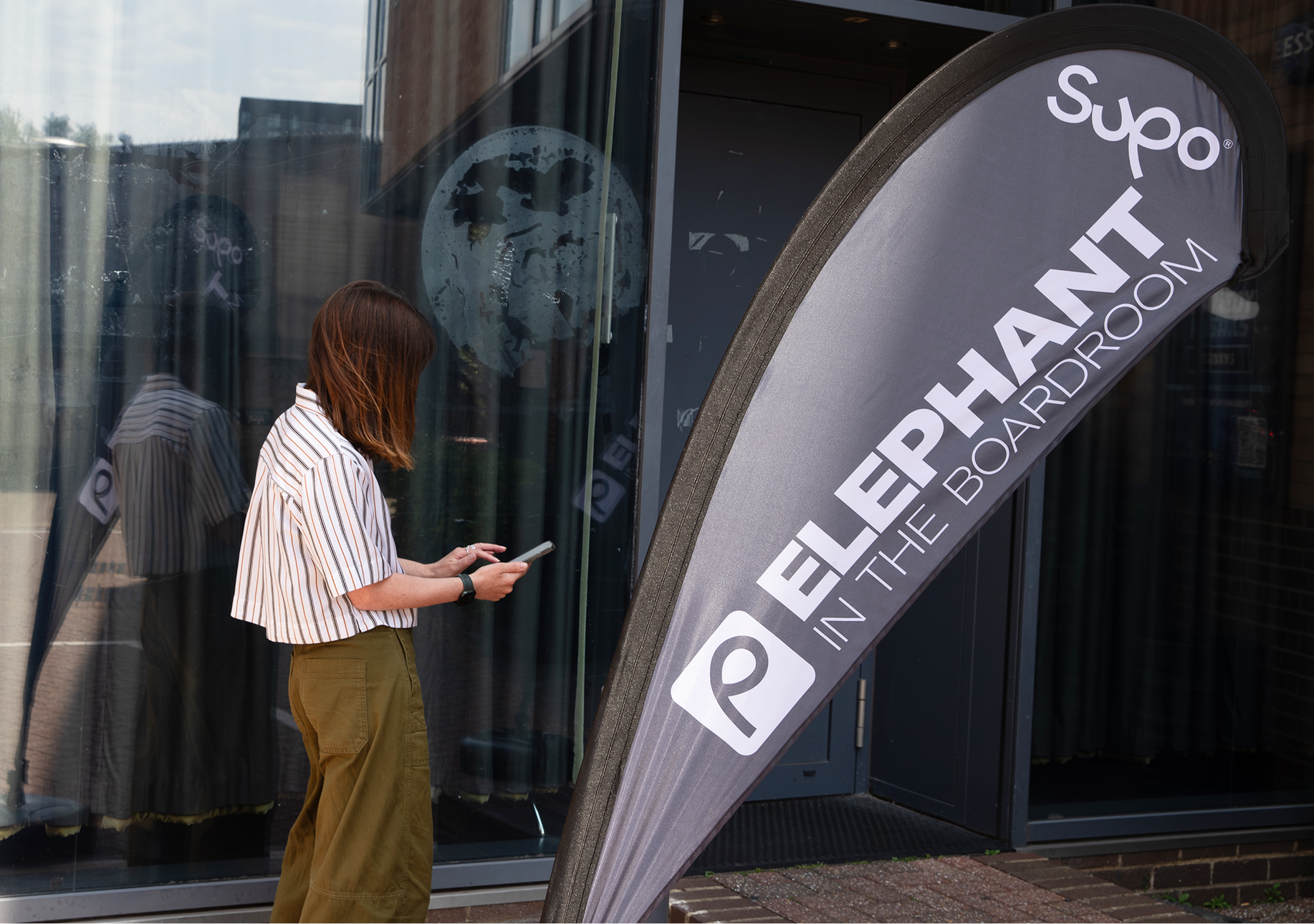
That question sat at the heart of the recent Elephant in the Boardroom roundtable, hosted by Supo. Around 20 senior agency leaders came together to discuss the realities they face within their businesses.
What emerged wasn't a list of trends or predictions. It was a candid picture of a sector navigating profound change whilst trying to hold onto the practices that made it successful in the first place.
Across procurement, AI, hybrid working, talent and culture, one message surfaced repeatedly:
The old agency playbook is beginning to show its age.
Relationships are no longer enough
For decades, relationships were the foundation of business development in agency land. The strongest networks often won the work; reputation opened doors, and trust closed deals.
But the leaders around the table described a different reality. Procurement-led buying processes have steadily shifted decision-making away from specialists and towards formal evaluation frameworks. It is becoming much harder to prove that your expertise is any better than the rest. As one participant observed:
It used to be about relationships. Now it's commoditised.
Relationships still matter. However, they no longer compensate for weak positioning, slow responsiveness or an inability to communicate value clearly.
As relationships become less reliable as a source of competitive advantage, many agencies naturally look to technology for differentiation. The roundtable suggested that it may no longer be enough, either.
Technology is becoming the baseline
Artificial intelligence dominated much of the discussion, but not because leaders were debating whether to use it. Most organisations already are.
"Something like 10% of businesses say they use AI, but 90% of employees do."
The more important question is what remains valuable once everyone has access to the same tools. For years, technology created a competitive advantage; today, technology is rapidly becoming the baseline.
The firms creating meaningful advantages are not selling AI. They are using it to strengthen judgement, improve outcomes and free up time for higher-value work. As one participant put it:
"You're not paying for the paintbrush. You're paying for what we do with it."
Yet technology solves only part of the challenge. The discussion repeatedly returned to another factor that technology cannot replace: people.
People are learning differently
The debate around hybrid working often focuses on productivity. The leaders around the table were concerned about learning.
Several participants described what one leader called the "osmosis problem": the intangible development that happens through proximity. By working alongside seasoned professionals, junior staff gain invaluable insight into decision-making and crisis management simply by observing day-to-day operations.
"This learning doesn't happen on Zoom. You can't schedule it."
The point is that flexibility comes with trade-offs. Many organisations failed to anticipate when remote working became the norm. The challenge is no longer where people work. It's how agencies create the conditions for people to learn, collaborate and grow.
Culture requires deliberate design
Throughout the years, culture was treated as something that happened naturally. Hire good people, create a positive environment, and the rest will take care of itself.
The leaders described a different approach. The strongest cultures were built deliberately through behaviours, rituals, and leadership decisions repeated consistently over time. One organisation invited junior employees to participate in strategic discussions. Another involved teams directly in shaping company values and priorities. As one participant explained:
"They can challenge us. They should. They might have the answer."
True impact stems from intent, not action. The strongest agencies treat culture as a structured business system, intentionally designing it rather than letting it emerge as an incidental by-product of growth.
Yet even strong cultures face a practical reality. Growth depends on people who can not only deliver great work, but also communicate its value.
Expertise must create commercial value
Many agencies are filled with technically brilliant people, yet technical expertise does not automatically translate into commercial success.
"I've got people who are technically exceptional, creatively outstanding. But put them in a room to discuss budget or scope, and they crumble."
Today, clients expect expertise that can be communicated clearly, connected to outcomes and translated into business value. The firms succeeding in this environment understand that technical expertise and commercial confidence are no longer separate skills.
Moving forward
The most important insight from the roundtable was not about procurement, AI, hybrid working or culture. It was about adaptation. As one participant reflected:
"The real shift was accepting that we can't be everything. Once we knew what we were and weren't, decisions became easier."
The leaders around the table were describing different symptoms of the same shift. The assumptions that once drove growth are becoming less reliable, whilst new expectations are emerging across every part of the industry.
The agencies making progress are not necessarily the largest, the most established or the most technologically advanced. They are the ones willing to recognise that the rules have changed and adjust accordingly.
Is your firm adapting to the market, or still waiting for the market to adapt to you?
Read the Whitepaper: The Real Shift: Conscious Choices and discover how agency leaders are navigating uncertainty, building operational confidence and making deliberate choices for growth.
About Supo:
Supo provides people-first intelligence software for professional services firms, helping businesses maximise profit and motivate their people through powerful, AI-enabled business intelligence dashboards. By connecting over 500+ platforms and providing real-time data analysis, Supo helps firms make better data-driven decisions about their profit, projects, and people.
For more information about Supo: www.supo.co.uk